


Toby Stephens on playing mind games in 'Equus'
Toby Stephens talks about mental health, repression, and playing detective, as he stars in Peter Shaffer’s Equus about the psychology of an unusual teenage boy.
Summary
- Toby Stephens stars as psychiatrist Martin Dysart in Equus
- The play is being revived at the Menier Chocolate Factory
- The play intriguingly investigates worship and sexual desire
Sometimes, when a play gains a reputation as a trailblazing or transgressive work, it can be reduced to its most shocking elements in the popular imagination. That has happened to Peter Shaffer’s 1973 play Equus, believes Toby Stephens, who is leading a major London revival. “Obviously there’s the nakedness, and this weird kid who has an obsession with horses,” he says, referring to 17-year-old Alan Strang, who, at the start of the play, has just blinded six horses. Strang does also disrobe – which caused quite a stir when a certain Harry Potter star played him in the West End in 2007.
“I’m glad we’ve got a bit of air between our production and the Daniel Radcliffe thing, so it can be reassessed for a new generation,” says Stephens. “It’s such a clever piece of writing: such a deep play on so many levels, and very satisfying. I hadn’t realised it’s actually about two people who are in crisis. There’s the kid in crisis at the beginning of his life, and the older man in crisis at the end of his life.”
That man is psychiatrist Martin Dysart (played by Stephens), and his task is to figure out Strang’s motivations, which include the entangling of religious worship and sexual desire. “[Dysart is] almost like a detective,” says Stephens. “But it takes him into a crisis of thinking ‘What am I doing? If I cure this kid, I’m going to rob him of something extraordinary. Is the cure worse than the disease?’ When he understands the intricacies of this kid’s belief system, how he’s created this whole world for himself, he discovers his own existential yearning to believe in something bigger.”
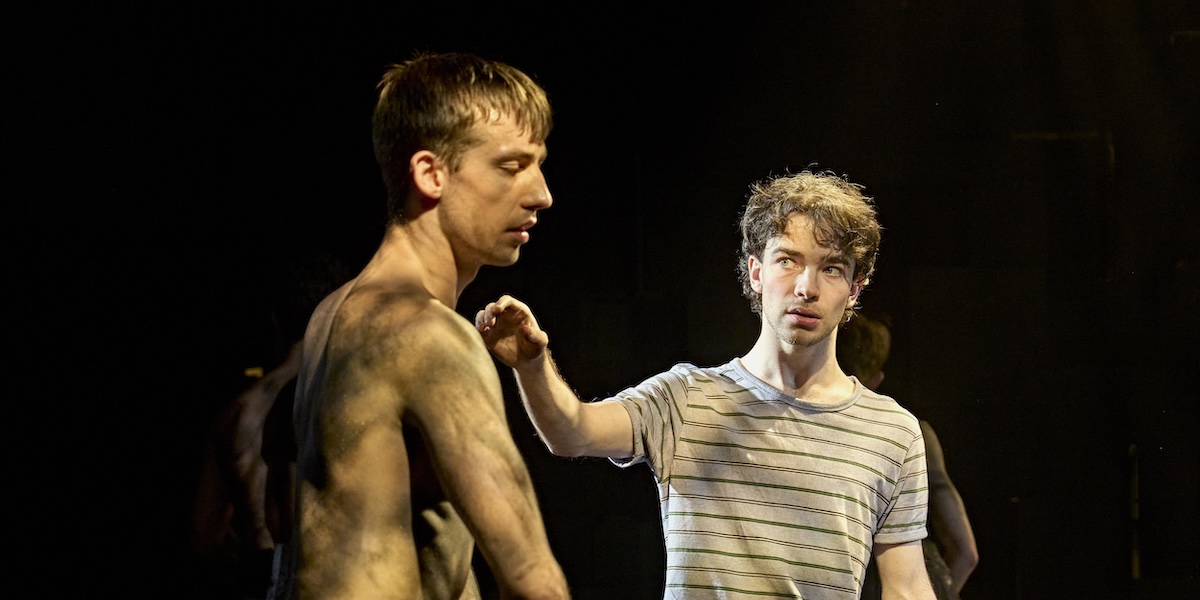
Stephens’s preparation included reading psychiatrist R. D. Laing’s book on mental health, The Divided Self, which was very influential during the period when Shaffer was writing. “His whole attitude is saying ‘What is insanity, who’s the arbiter of that?’.” Stephens also thought about the repressive society of the time “and the fact that Shaffer was gay. The play is talking in veiled terms about sexuality: what the societal norms were then, and how there was this terrible idea that we could ‘cure’ people.”
Lindsay Posner’s Menier production remains set in the 1970s, but Stephens thinks there is plenty that will chime with a modern audience, such as the pressure to conform and fear of social judgement. Its knotty dilemmas continue to test us, he believes. “Like all great plays, it doesn’t answer anything – it asks questions. Audiences will hopefully go away having really been challenged by it.”
Stephens himself had no problems connecting with his character. “It wasn’t a huge reach to identify with someone in the middle of their life who’s questioning everything,” he chuckles. “I’m pretty sure most people get to the point where I am – I just turned 57 – and wonder ‘Where am I going, am I still happy in my job, is it doing any social good, what do I believe in?.’ There’s a jaded quality to Dysart, who’s lost his mojo and his marriage. Luckily I don’t have that part; I’m very happily married with kids. He is a tragic figure, but he’s also empathetic and a decent man trying to do his best.”
Stephens is enjoying working with “the wonderful” Noah Valentine, who plays Alan. Has Stephens offered him any advice? “I’m not one of those actors who tries to tell young people what to do,” he states firmly. “I used to hate actors like that. They’re on their own voyage of discovery.”
Stephens’s career journey has been a fascinating one. Born into a thespian family – his parents were the acclaimed actors Sir Robert Stephens and Dame Maggie Smith – he started out at the Royal Shakespeare Company, which he calls his apprenticeship. “I was very, very lucky – they gave me a lot of roles to play very quickly, and I learnt a huge amount there. I will always be grateful. It was my dream to work at the RSC.” He has since moved between stage and screen, including playing memorable roles like Bond villain Gustav Graves in Die Another Day and Mr Rochester in Jane Eyre, and returning to the theatre to star in plays such as Private Lives, Oslo, and The Real Thing.
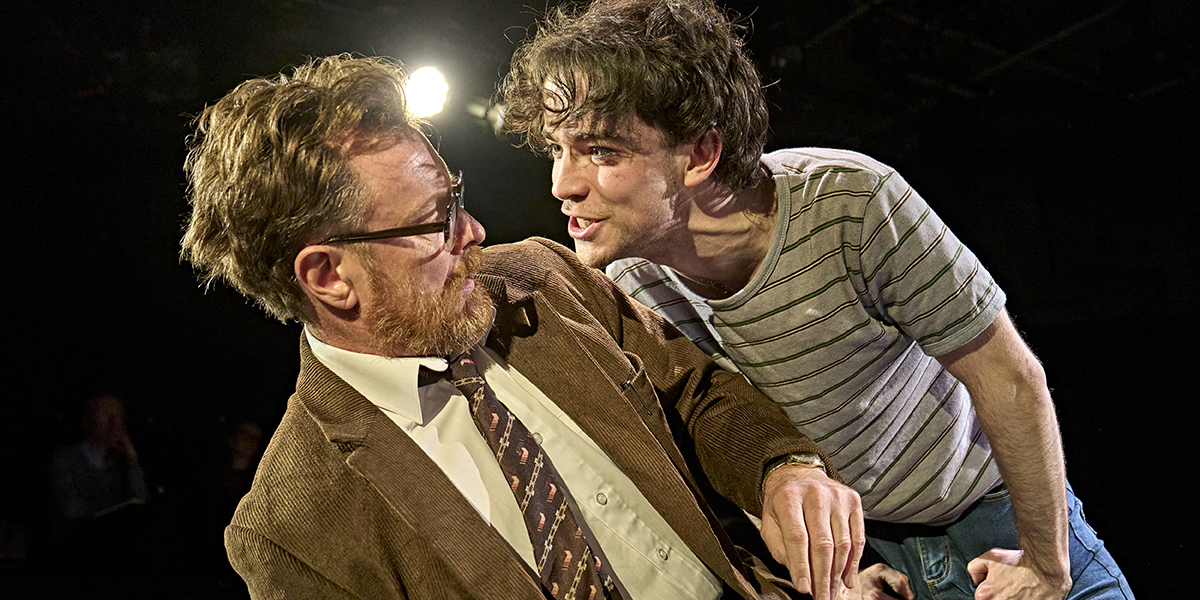
He would love to do more theatre, noting that “it’s a muscle you have to keep alive. The stage is where you really grow as an actor.” He credits that dedication and work ethic to his late mother, recalling seeing how the Oscar winner always continued to refine her performances. “I learned about the humility of somebody who is that good, yet who always goes ‘I can be better. I need to be better.’”
Stephens has a surprising role on his own wish list: Sweeney Todd. He saw the original Broadway production of Sondheim’s musical with his father and brother in 1979, starring Len Cariou and Angela Lansbury, “and it blew my head off. I’ve never done a musical, although I do see Sweeney Todd as more of an operetta, a very dark one.” He would also love to return to the RSC one day.
But for the time being, he has a new TV drama coming up, The Season, set in the world of Hong Kong’s elite, and of course the thrilling challenge of doing Equus in the bijou Menier. “I haven’t worked there yet, so I think the only thing I can compare it with is the Donmar, which is similarly close – I absolutely loved working there.” Such an intimate space as the Menier is ideal for what Stephens calls “a very humane piece. I find it incredibly moving.” There’s also the added element of movement in the show “with these amazing dancers. It’s so great having that energy in the room – it enhances everything. I’m really excited for audiences to share in it too.”
Book Equus tickets on LondonTheatre.co.uk
This article first appeared in the June 2026 issue of London Theatre Magazine.
Photo credit: Toby Stephens in Equus. (Photos by Manuel Harlan)
Originally published on
Latest News
- 1
First look at Kristin Scott Thomas in 'The Cherry Orchard' in the West End
- 2
Joel Harper-Jackson to take leave of absence from 'Sinatra' following injury
- 3
Emma Thompson's 'Nanny McPhee' musical announces further details
- 4
'Kimberly Akimbo' tickets now available through November 2026
- 5
Sacha Baron Cohen to star in 'The Popinjay Cavalier' in the West End
- 6
Neil Morrissey to star in 'Fourteen Again' at the Menier Chocolate Factory
- 7
Adrian Lester, Katie Leung, Rosie Sheehy and more among 'An Oak Tree' cast
- 8
'The Truth' to return to the West End in 2027
- 9
Joe Lycett and Olivia Cooke to join 'White Rabbit Red Rabbit'
- 10
First look at 'Into The Woods' in the West End
Related articles
Subscribe to our newsletter to unlock exclusive London theatre updates!
- Get early access to tickets for the newest shows
- Access to exclusive deals and promotions
- Stay in the know about news in the West End
- Get updates on shows that are important to you
You can unsubscribe at any time. Privacy Policy