


Learn about the real history behind 'Martin Guerre'
As the Olivier-winning musical is revived at the Old Vic, find out what really happened in this remarkable story.
Summary
- Musical Martin Guerre is being revived at the Old Vic
- The show is based on an extraordinary real-life case from the 16th century
- A man posed as Martin Guerre and lived with Martin's wife for three years
- It led to a dramatic trial and years of debate
Fittingly for a story about reimagined identities, the musical Martin Guerre is back in a whole new guise. This bold revival, running at the Old Vic in October and directed by Matthew Warchus, places the show in an intimate in-the-round staging and introduces new music, lyrics, and folk-inflected orchestrations.
It’s a fascinating rebirth for Martin Guerre, which is written by the creators of Les Misérables, Alain Boublil and Claude-Michel Schönberg, and based on an astonishing real-life figure from the 16th century. Get to know the actual history ahead of your trip.
Book Martin Guerre tickets on LondonTheatre.co.uk
Who was Martin Guerre?
That is actually a complex question to answer! The original man lived in a small village, Artigat, in the Pyrenees in France in the early 16th century. At 14, he married Bertrande de Rols, and, eight years later, they had a son, Sanxi. In 1548, when Martin was accused of stealing grain from his father, he disappeared, abandoning his wife and child. Due to the Catholic Church’s Canon law, his wife was unable to remarry.
However, in 1556, “Martin Guerre” reappeared in Artigat. Or did he? The man resembled Martin and knew details about his life, so most of the villagers were convinced – as, seemingly, was his wife Bertrande. The couple lived peaceably together for three years and had two children, one of whom, a daughter, survived.
But arguments arose when this Martin sued his uncle, Pierre Guerre (who had married Betrande’s mother while Martin was away), for part of Martin’s late father’s inheritance. Pierre and Bertrande’s mother told Bertrande that this Martin must be an imposter. Suspicions grew when a passing soldier claimed that the real Martin had lost his leg during the war in Italy. Pierre and his sons physically attacked Martin, but Bertrande defended him.
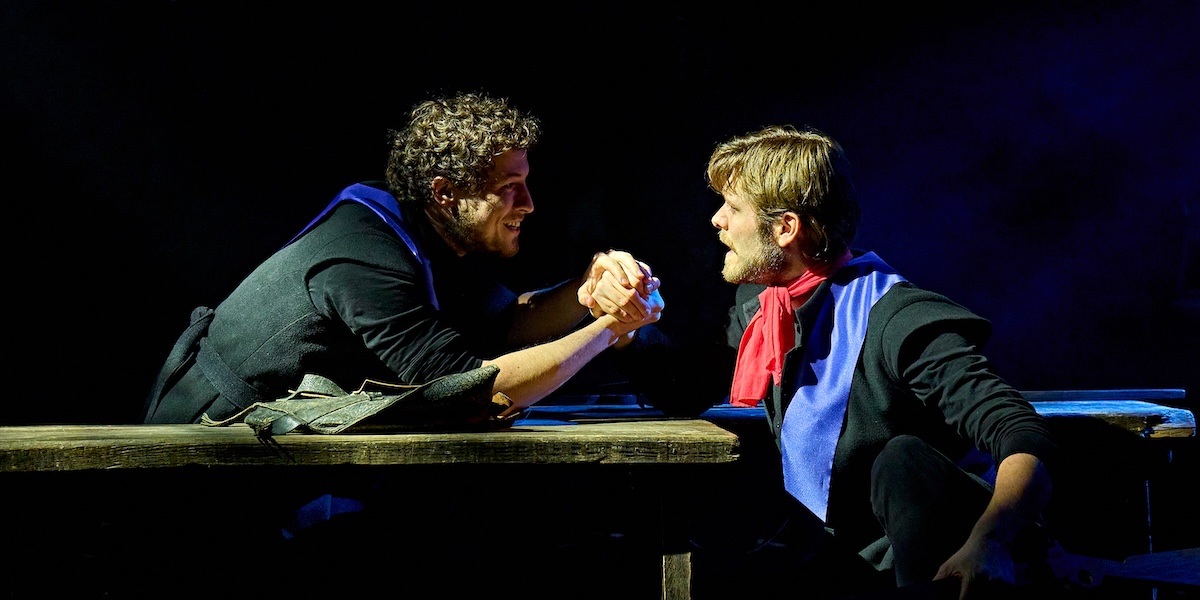
The trial of Martin Guerre
After further investigation, Pierre discovered the real identity of the supposed Martin: Arnaud du Tilh, aka Pansette (“big belly”). He was actually a peasant from the village of Tilh, and he had a bad reputation back home: he was known for drinking, gambling, and having affairs.
Pierre convinced Bertrande to bring a charge against Arnaud for falsely claiming to act in her name, which she reluctantly did. The case was tried in Rieux in 1560, where Bertrande testified that she really had believed the man was her husband Martin. That was supported by her and Arnaud separately sharing an intimate story from their lives together before his disappearance.
Arnaud then challenged her: would she swear publicly that he was not her husband? If so, he would accept his fate and be executed. Interestingly, Bertrande stayed silent. However, with numerous witnesses testifying that this was indeed Arnaud, not Martin, he was sentenced to be beheaded.
The real Martin returns
In a dramatic development (no wonder this became a stage show!), the real Martin suddenly appeared during Arnaud’s case before the Parlement of Toulouse. Pierre was now the one in trouble: Arnaud had accused him and Bertrande of false accusation, and Pierre of soliciting perjury for financial gain.
Oddly, Martin – who now had a wooden leg – was unable to answer questions about his past married life in as much convincing detail as the imposter. But, when they saw the two men side by side, the Guerre family agreed that this was the real Martin.
Arnaud was convicted and sentenced to death. He finally confessed all: he’d learnt about Martin’s life and decided to take his place. He apologised to Bertrande and the villagers for his deception, and, a few days later, he was hanged in Arigat.
Meanwhile, the real Martin revealed that he had gone to Spain, served in the army, and been sent to Flanders where he was badly wounded. He lived there in a religious house before finally returning home. He refused to accept Bertrande’s apologies, believing that she should never have taken another man as her husband. However, the couple did resume married life and had two more children, before Bertrande died in the mid 1570s.
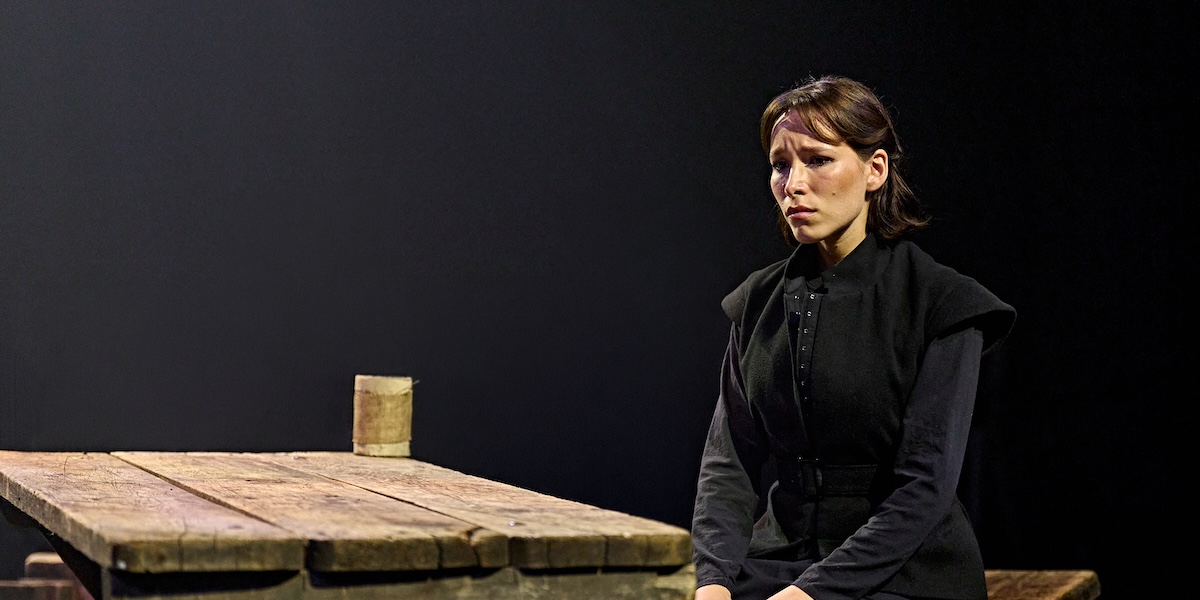
Martin Guerre in popular culture
Unsurprising, this fascinating case has been covered numerous times over the years. There were two contemporary accounts: Histoire Admirable by Guillaume Le Sueur and Arrest Memorable by trial judge Jean de Coras. The 19th-century novelist Alexandre Dumas fictionalised the case in The Two Dianas and also wrote about it in Celebrated Crimes.
More recently, Janet Lewis explored Bertrande’s journey in her 1941 novel The Wife of Martin Guerre. Philip K. Dick sketched out a similar tale in his 1955 short story “Human Is”, and William Bergsma turned the saga into an opera in 1956. It’s reached the big screen too: in 1982, Gérard Depardieu and Nathalie Baye starred in the movie The Return of Martin Guerre, and in 1993, Hollywood adapted it into Sommersby, led by Jodie Foster and Richard Gere, transposing the setting to the American Civil War.
Historians have furiously debated what really happened. Natalie Zemon Davis, in her 1983 book, argued that Bertrande knew “Martin” was an imposter, but went along with the fraud because he treated her well and she needed a husband to survive her patriarchal society. However, Robert Finlay, in a 1988 essay, countered that Bertrande must have been deceived or she wouldn’t have accused him of fraud and risked being charged herself.

Martin Guerre the musical
Alain Boublil and Claude-Michel Schönberg’s 1996 stage adaptation uses the real story for its dramatic framework, but makes some interesting changes. It builds in a new backstory giving the key characters different motivations: young Martin is forced into an unhappy marriage with Bertrande, and he is beaten by priests when he fails to produce a Catholic heir with her. He also has a rival: Guillaume, who is fixated on Bertrande.
In the show, Martin runs away and becomes a soldier in order to fight the Protestant Huguenots. That’s how he meets Arnaud, and he tells him his life story. Martin seemingly dies in battle. Arnaud then goes to Artigat to tell Bertrande of her husband’s death, but, when he’s mistaken for Martin by the villagers, he spontaneously decides to go along with it.
The show paints Arnaud much less as a calculated fraudster and more as a romantic figure who drifts into this new role – and then stays because he and Bertrande fall in love. In the show version, she is aware that this isn’t her husband, but keeps the secret because they’re so happy together. The relationship transforms them both: the previously drifting Arnaud becomes a good man and a solid member of the community.
There is a religious aspect in the show as well: Bertrande has secretly become a Protestant and she converts Arnaud. The jealous Guillaume uncovers this and reveals their secret, leading to a mob attacking them. There is also conflict between Arnaud and Pierre over how the land is farmed, ascribing a personal motive to Pierre’s later actions.
The conclusion of the show plays out very differently to the real life tale — but you'll have to watch to find out how!
Book Martin Guerre tickets on LondonTheatre.co.uk
Photo credit: Martin Guerre during the 2025 workshop ahead of the Old Vic revival (Photos by Manuel Harlan)
Frequently asked questions
What is Martin Guerre about?
The extraordinary true story of forbidden love, deceit and passion on trial… in an all-new version.
Where is Martin Guerre playing?
Martin Guerre is playing at The Old Vic. The theatre is located at 103 The Cut, London, SE1 8NB.
How much do tickets cost for Martin Guerre?
Tickets for Martin Guerre start at £30.
What's the age recommendation for Martin Guerre?
The recommended age for Martin Guerre is Ages 12+..
How do you book tickets for Martin Guerre?
Book tickets for Martin Guerre on London Theatre.
How long is Martin Guerre running?
Martin Guerre currently has tickets available through 31 October 2026. Check calendar for availability.
Who directed Martin Guerre?
Martin Guerre is directed by Matthew Warchus.
Is Martin Guerre West End or Off-West End?
Martin Guerre is Off West End.
Who wrote the music and lyrics for Martin Guerre?
The music and lyrics for Martin Guerre were written by Alain Boublil & Claude-Michel Schönberg.
Originally published on
Latest News
- 1
Learn about the real history behind 'Martin Guerre'
- 2
Get to know the Herods in 'Jesus Christ Superstar' at Theatre Royal Drury Lane
- 3
Get to know the West End cast of 'Hay Fever'
- 4
'Magic Mike Live' tickets now available through January 2028
- 5
Teri Hatcher to take over from Vanessa Williams in 'The Devil Wears Prada'
- 6
Full casting announced for 'The Rise and Fall of Little Voice' at the National
- 7
'Dirty Dancing' to return to the West End in 2027 as Capital Theatre delays opening
- 8
First look at the 40th anniversary cast of 'Phantom of the Opera'
- 9
Cast and creative team announced for 'Nine Night' at the Kiln Theatre
- 10
Cast announced for Timberlake Wertenbaker's 'The Animals Come to the Table'
Related articles
Subscribe to our newsletter to unlock exclusive London theatre updates!
- Get early access to tickets for the newest shows
- Access to exclusive deals and promotions
- Stay in the know about news in the West End
- Get updates on shows that are important to you
You can unsubscribe at any time. Privacy Policy