Just in time for spooky season, Paranormal Activity is back to send a shiver down your spine. The hit stage show, adapted from the iconic film series of the same name, has returned to the West End and is now playing at the Ambassadors Theatre.
Paranormal Activity is part of a thrilling horror resurgence in London theatre, alongside shows like 2:22 A Ghost Story, Ghost Stories, and Stranger Things: The First Shadow. These productions use a combination of old-fashioned theatre trickery, compelling drama, and jaw-dropping special effects to conjure up unforgettable scares.
But there is also a stellar history on horror on stage. Learn more about the legacy of this bloodcurdling genre – if you dare…

Horror in Shakespeare and Jacobean theatre
There have always been scary elements in theatre, going right back to Ancient Greece: think murder and gore, revenge and supernatural interventions, in plays such as Oedipus Rex, Medea, and The Oresteia. However, it was convention to keep violence off the stage and report it, so this genre is tragedy rather than horror in the modern sense.
But theatre really embraced the gore and ghosts by Shakespeare’s age. The Bard absolutely has elements of horror in Macbeth, Hamlet, King Lear, and Titus Andronicus, from spectral visitations and eerie prophecies to grisly mutilation, cannibalism, and psychological torment. Titus, in particular, is really the precursor to the gore-fest movies that are a big part of the horror movie genre today.
The Jacobeans also eagerly embraced horror through the revenge tragedy genre. Works like John Webster’s The Duchess of Malfi and The White Devil, Thomas Middleton and William Rowley’s The Changeling, and Middleton’s aptly named The Revenger’s Tragedy all feature chilling plots involving murder, torture, madness, ghostly imagery, corpses, and mental asylums.
This shift perhaps reflects the unsettled times, with political instability, religious conflict, assassinations, and a constant reckoning with mortality via the plague. James I, the early 17th-century monarch, also had a personal animus against witches.

Gothic horror in theatre
We might associate Gothic horror more with literature – classics such as Dracula, Frankenstein, The Mysteries of Udolpho, and The Strange Case of Dr Jekyll and Mr Hyde – but the 18th and 19th centuries also saw plenty of horror on stage.
That was partly helped by advancing technology, meaning the advent of special effects helping to summon thunder and lightning, supernatural apparitions and creatures, and crumbling castles with secret passages and dungeons. Skilled lighting and stagecraft – including trap doors and other illusions – were also key in creating gripping live spectacles that seemed impossible.
Another influential movement stemmed from the Théâtre du Grand-Guignol in Paris (which gave its name to a whole genre, Grand-Guignol). Its practitioners took a different approach, drawing on true crime and medical discoveries in telling grisly, stylised stories about, say, an operation gone horribly wrong or a nasty poisoning. It became legendary: spectators often fainted, so a doctor was kept on hand to treat them.
Horror in modern theatre
Although horror moved on screen in modern times, becoming a staple of cinema, it has continued to be a part of theatre too. In fact, we’ve seen a revival in the past few decades, heralded by the 1987 bone-chilling show The Woman in Black. Adapted from Susan Hill’s novel by Stephen Mallatratt, it’s the antithesis of cinematic horror, showing just what theatre can do with a tiny cast, fantastic storytelling, and the power of the audience’s imagination.
Playwrights like Conor McPherson and Martin McDonagh have included elements of horror in their works, such as McPherson’s ghostly The Weir and McDonagh’s unsettling The Pillowman, and there are otherworldly aspects to long-running shows like Wicked, The Mousetrap, and The Phantom of the Opera. Then, in 2010, Andy Nyman and Jeremy Dyson focussed on this genre specifically with their masterfully spine-tingling Ghost Stories.
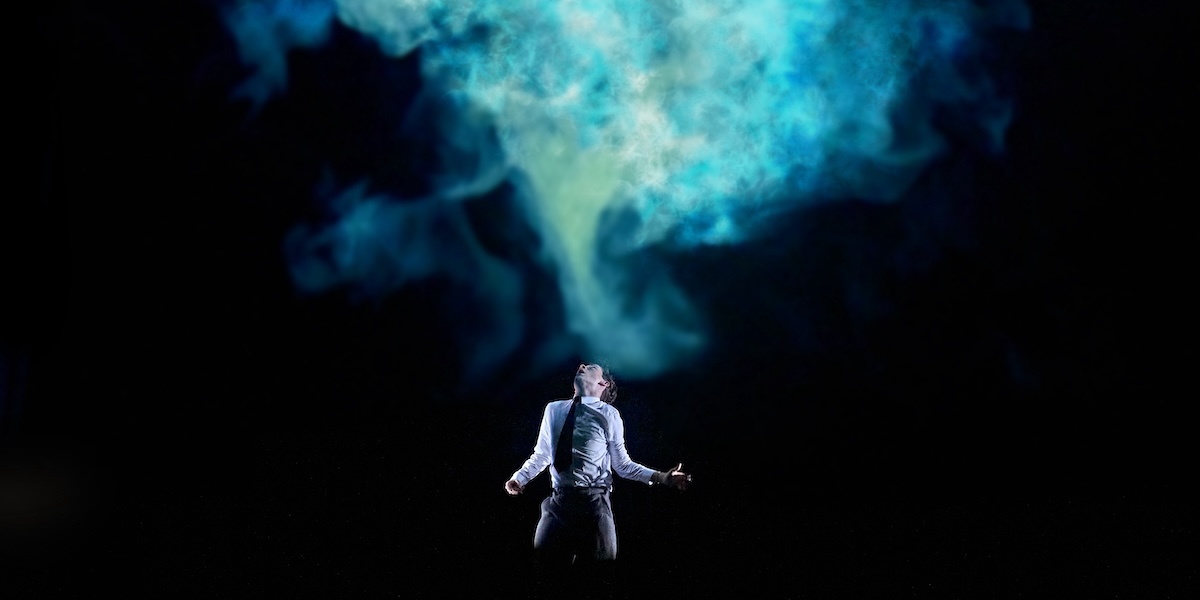
Recent years have seen big horror success like Danny Robins’s 2:22 A Ghost Story, which hinges on a woman’s conviction that her house is haunted, as well as screen-to-stage spin-offs like Inside No. 9: Stage/Fright and Stranger Things: The First Shadow, the latter using unbelievable special effects and theatrical tricks to conjure the uncanny world of the hit Netflix series.
Horror is also a big part of musical Beetlejuice, whose gleefully malevolent title character is a ghostly demon, while Paranormal Activity mixes jump scares with a haunted house story that is fascinatingly psychological. We’ll get immersive adventures next year, too, as Secret Cinema brings us Disney's Pirates of the Caribbean – which features a certain curse and some undead pirates. This is shaping up to be another golden age of stage horror: a scarily good time at the theatre.
Main photo credit: Paranomal Activity (Photo by Johan Persson). Inset: The Duchess of Malfi, Dracula, Stranger Things: The First Shadow (Photos by Marc Brenner, Manuel Harlan)