

Photo credit: Olivier statuette. (Courtesy of SOLT)
A guide to the categories in the Olivier Awards
Learn more about the awards given to productions, performers, and creatives ahead of this year's ceremony on 12 April 2026.
The Olivier Awards are probably the most prestigious in British theatre, honouring the best productions in the West End and leading non-commercial theatres in London. The awards were established in 1976 by the Society of London Theatre (SOLT) as the Society of West End Theatre Awards and were renamed in 1984 in honour of the great actor Laurence Olivier.
Who chooses the winners? There are four panels – theatre, opera, dance and affiliates – each supervised by SOLT. The professional panellists include journalists, casting directors, arts administrators and publishers. Several members of the public are also chosen to serve as judges. If you love theatre and lively debate, perhaps it could be you next.
Nominations for this year have already been announced, with Paddington and Into The Woods leading with 11 nods each. The ceremony will take place at the Royal Albert Hall on 12 April 2026 and will be hosted by Celebrity Traitors contestant and comedian Nick Mohammed.
The categories have undergone a good deal of alteration over the years, so ahead of this year’s nominations and ceremony, you can read our guide to the different categories with some fun facts thrown in. Which productions, performers, and creatives are you rooting for this year?
Best Play
Originally awarded as “Play of the Year” and renamed “Best New Play” in 2001, this is one of the most prestigious accolades of all. Numerous modern classics have won this award, including Brian Friel’s Dancing at Lughnasa, Conor McPherson’s The Weir, and Alan Bennett’s The History Boys.
In 2024, it was won by James Graham for his crowd-pleasing football/state-of-the-nation play Dear England, while last year it went to Mark Rosenblatt for the Roald Dahl-drama Giant, starring John Lithgow, who is performing in the same role on Broadway right now.
So far, the award has been won by seven women (Caryl Churchill, Timberlake Wertenbaker, Pam Gems, Katori Hall, Lucy Kirkwood, Lolita Chakrabarti, and Suzie Miller) – as we’ll see in many categories, there’s certainly room for greater gender parity. David Hare, Martin McDonagh, Simon Stephens, and Tom Stoppard have each won twice, and Hare and Stoppard have both been nominated seven times.

Best Revival
This category was introduced in 1991, retired in 1996, and then had a revival of its own in 2003. Celebrated directors whose productions have won this category include Trevor Nunn, Dominic Cooke, and Marianne Elliott.
The prize has been won on five occasions by productions of Shakespeare plays. American writers Tennessee Williams, Eugene O’Neill, and Arthur Miller have also done well here. Ibsen’s Hedda Gabler has won twice (directed by Deborah Warner in 1992 and by Richard Eyre in 2006). The only play by a woman to win this category to date is Sophie Treadwell’s Machinal, in a production by Stephen Daldry, in 1994. The most recent winner was Robert Icke's Oedipus, starring Lesley Manville and Mark Strong.
Best Entertainment or Comedy Play
This is bit of a random one and the winners and nominees comprise something of a miscellany. The award was named “Comedy of the Year” until 1990, when it became “Best Comedy”, and received its new name in 2020. Comedy has always been undervalued, and the plays categories do tend to favour more “serious” drama. If you look at the 2019 nominees, Laura Wade’s Home, I’m Darling (winner), Natasha Gordon’s Nine Night, and James Graham’s Quiz are all excellent pieces of writing that could have been entered for Best New Play.
New work and revivals are both eligible. In 2024, the award went to Stranger Things: The First Shadow, a prequel to the Netflix show, while last year, Tye Blue, Marla Mindelle and Constantine Rousouli's hilarious Titanique took home the top prize. My heart will go on, indeed!

Best Actor / Best Actress in a Play
Prior to 1984, two awards were given in each category for Actor/Actress of the Year in a New Play and Actor/Actress of the Year in a Revival. Ian McKellen holds four awards for Best Actor and Judi Dench has five for Best Actress. In 2012, Benedict Cumberbatch and Jonny Lee Miller shared the Best Actor prize when they alternated as Frankenstein and The Creature in Nick Dear’s adaptation of Mary Shelley’s novel. The late Maggie Smith was nominated five times for Best Actress but astonishingly never won.
It’s a highly coveted award in any actor’s trophy cabinet. Actors who have won Oliviers and Oscars include Helen Mirren (for playing Queen Elizabeth II in both instances), Rachel Weisz, and Eddie Redmayne. Last year's winners include Lesley Manville for Oedipus and John Lithgow for Giant.
Best Actor / Actress in a Supporting Role in a Play
Supporting roles are absolutely indispensable but these awards have a somewhat bumpy history at the Oliviers. Actors and actresses were combined in one category in 1985 and didn’t run altogether in several years. On the 16 occasions that the category included both genders, it was awarded six times to an actress and 10 times to an actor. The current categories have run continuously since 2013.
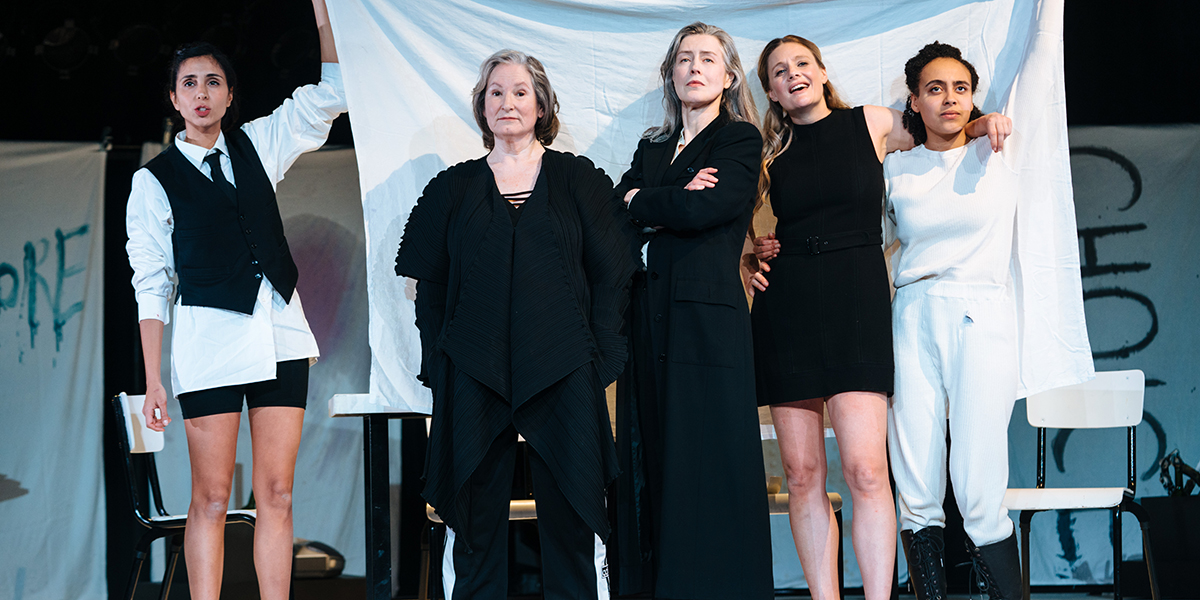
One of the quirkiest wins in Olivier history was the one shared between Fred Davis, Daisy Franks, Romina Hytten, Tom Larkin, Habib Nasib Nader, Tom Stacy and Scarlet Wilderink as the Tiger in Life of Pi in 2023 (for the Actor category, though the septet included three women). There have also been group nominations for Our Lady of Perpetual Succour (2017) and For Black Boys Who Have Considered Suicide When the Hue Gets Too Heavy (2023). Elliot Levey (for Giant) and Romola Garai (for The Years) are the most recent winners - Garai beat herself in the category, as she was also nominated for Giant.
Best Musical
Always a fun one. The first winner was the bittersweet backstage classic A Chorus Line and other modern classics including Hairspray, Spring Awakening, and Hamilton have also taken the prize. Many winners and nominees have been American imports, but British offerings including Billy Elliot, Matilda, and Standing at the Sky’s Edge have also triumphed.
Four musicals by Stephen Sondheim have taken the prize (Sweeney Todd, Follies, Sunday in the Park with George, and Merrily We Roll Along) and three by Andrew Lloyd Webber (Evita, Cats, and The Phantom of the Opera). There are also some pretty obscure winners in there (Poppy or Kat and the Kings, anyone?). Last year’s winner was plucky British little-musical-that-could The Curious Case of Benjamin Button — a deserving winner, and very similar in terms of its path as Operation Mincemeat, which won the year before.
Unlike the Tonys, the Olivier doesn’t have separate awards for Best Score, Best Book or Best Orchestrations, but certain achievements can be celebrated in the Outstanding Musical Contributions award (more details to come).
Best Musical Revival
A chance to celebrate the classics of the genre, introduced in 1991 (until 2007, it was known as “Outstanding Musical Production”). Oklahoma! and Sweeney Todd have won twice each – the former in 1999 and 2023, and the latter in 1993 and 2013.
Jamie Lloyd’s stripped-back revival of Sunset Boulevard did extremely well in 2024, including nabbing this category, while last year's Fiddler of the Roof took home the top prize. Will Jordan Fein and Tom Scutt have similar success with this year's Into The Woods?
Best Actor / Actress in a Musical
Like the plays category but with musicals! Among the men, Philip Quast has won the prize thrice (Sunday in the Park with George, The Fix, South Pacific). James Lomas, George Maguire and Liam Mower memorably shared the award for Billy Elliot. Denis Quilley, Alun Armstrong, and Michael Ball all won for the title role in Sweeney Todd in 1980, 1994, and 2013 respectively.
As for the ladies, Imelda Staunton holds the record with four wins (Into the Woods, Sweeney Todd, Gypsy and last year's Hello, Dolly!). Sophie Thompson has also won for Into the Woods and Julia McKenzie for Sweeney Todd. Martine McCutcheon and her successor Joanna Riding both won for Trevor Nunn's production of My Fair Lady (replacements used to be eligible for nominations) and Julia McKenzie and Jane Krakowski have both won for Miss Adelaide in Guys and Dolls, over two decades apart.
And, of course, the four Matildas – Cleo Demetriou, Kerry Ingram, Sophia Kiely, and Eleanor Worthington Cox – were top of the class in 2012.
John Dagleish scooped the top prize last year for Benjamin Button.
Best Supporting Actor / Actress in a Musical
A mixed category existed for Best Supporting Performer in a Musical between 1991-2014. Tracie Bennett (She Loves Me, Hairspray) and Jenny Galloway (The Boys from Syracuse, Mamma Mia!) both won twice. Most recent winners include Maimuna Memon for Natasha, Pierre and The Great Comet of 1812 (currently on stage in her gig-theatre show Manic Street Creature) and Layton Williams for Titanique (he is now performing the role in the Broadway cast).
Outstanding Musical Contribution
This award was introduced in 2014 as Outstanding Achievement in Music and was renamed Best Original Score or New Orchestrations from 2020 to 2023. Under its current title, it was most recently awarded to Allan Clayton for Festen at the Royal Opera House.
Sir Peter Hall Award for Best Director
This prestigious award celebrating the creative vision of the people who hold the show together was renamed in honour of the celebrated director Sir Peter Hall in 2019. Howard Davies, Stephen Daldry, Declan Donnellan, Richard Eyre, and Sam Mendes have all won twice.
Deborah Warner, Marianne Elliott, Miranda Cromwell, Lyndsey Turner, Rebecca Frecknall, and last year's winner Eline Arbo (for The Years) are the six female directors to have won so far. It has yet to be won by a person of colour (in fact, there have been very few non-white nominees).
In 2024, it was won by Jamie Lloyd for Sunset Boulevard, the fifth time the direction of a musical has taken the honour in a category in which plays and musicals are both eligible; there were separate awards for plays and musicals between 1991-95, like in the Tonys.
Gillian Lynne Award for Best Theatre Choreography
Introduced in 1991, this category was renamed in honour of the late choreographer Gillian Lynne in 2023. It’s usually dominated by musicals but plays are sometimes nominated (in Dear England, football was represented through Ellen Kane and Hannes Langolf's stylised movement).
Matthew Bourne has won on five occasions and Stephen Mear on three. Last year, Christopher Wheeldon won for MJ The Musical.
Theatre Design Categories
There are four categories for design: Best Set Design, Best Costume Design, Best Lighting Design, and Best Sound Design. Originally there was only one award for Designer of the Year – costume and lighting were introduced in 1991, and sound in 2004.
Current holders are Tom Scutt (Fiddler on the Roof), Paule Constable and Ben Jacobs (Oliver!), Gabriella Slade (Starlight Express), and Nick Lidster (Fiddler on the Roof).
 .
.
Dance and Opera
While plays and musicals get the lion’s share of the attention, there are also awards for Best New Dance Production, Best New Opera Production, Outstanding Achievement in Dance, and Outstanding Achievement in Opera.
Society of London Theatre Special Award
An honorary category, in which Laurence Olivier himself was honoured in 1979. In 2023, actor Derek Jacobi and choreographer Arlene Phillips received Special Recognition Awards (this sub-category was introduced in 2020).
Best Family Show
Another category with a convoluted history – it’s existed in its current form since 2012, celebrating theatre for young people. Brainiac Live at Marylebone Theatre was the most recent winner.
Best New Production in Affiliate Theatre
Introduced in 2004, this category celebrates excellence in London theatre beyond the West End. Last year’s winner was Boys on the Verge of Tears at Soho Theatre.
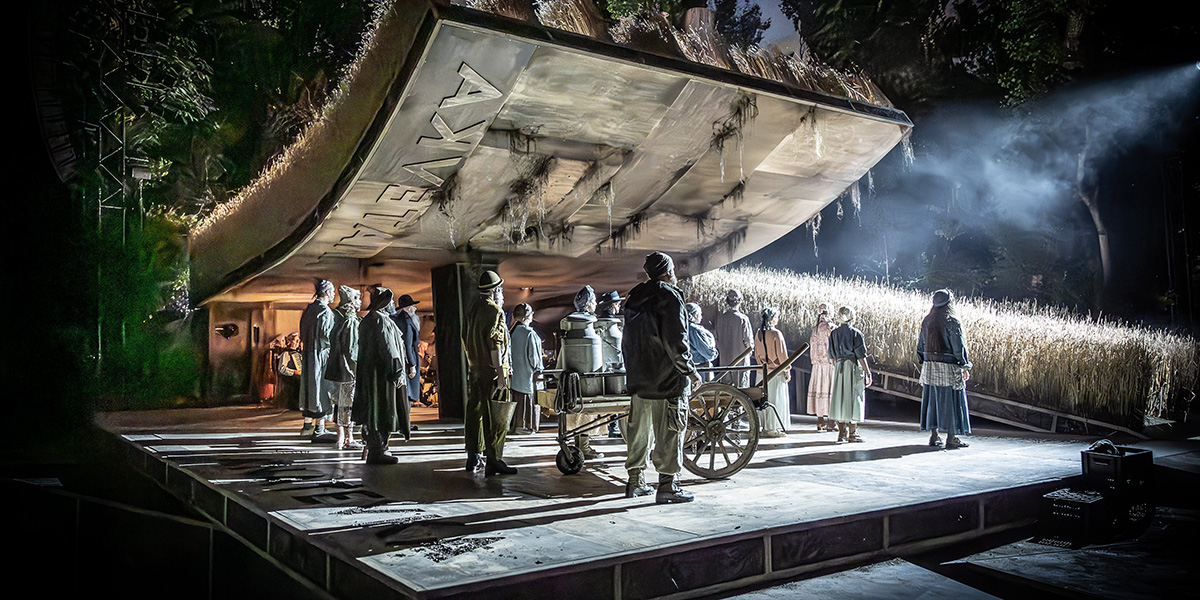
Photo credit: Giant, Titanique, The Years, Fiddler on the Roof, Oliver!
Originally published on
Related articles


Subscribe to our newsletter to unlock exclusive London theatre updates!
- Get early access to tickets for the newest shows
- Access to exclusive deals and promotions
- Stay in the know about news in the West End
- Get updates on shows that are important to you
You can unsubscribe at any time. Privacy Policy