


Photo credit: Michael Sheen and Callum Scott Howells (Photo by Danny Kaan for Margo Jones Agency)
Learn about the real history of Mozart and Salieri ahead of 'Amadeus'
Peter Shaffer's riveting play of rivalry, sabotage and musical genius is back in London in 2027, led by Michael Sheen and Callum Scott Howells.
Summary
- Amadeus is returning to the West End in 2027 in a major revival
- The play depicts the ruinous rivalry between composers Salieri and Mozart
- The pair did actually cross paths and may have had some resentments
- But the play definitely goes further in depicting their feud than it seems was the case in real life
The enthralling musical duel Amadeus is returning to the West End in 2027, with Michael Sheen and Callum Scott Howells leading a major revival at the Noël Coward Theatre. Peter Shaffer’s award-winning play sees court composer Salieri supplanted by a bewildering genius: Wolfgang Amadeus Mozart.
But just how much of this riveting drama is actually true? As you plan your trip to see Amadeus in London with this amazing new cast, learn all about the real-life figures depicted in the play (and subsequent Oscar-winning movie and recent TV series), what happened to them, and the glorious music they produced.
Check back for Amadeus tickets on LondonTheatre.co.uk.
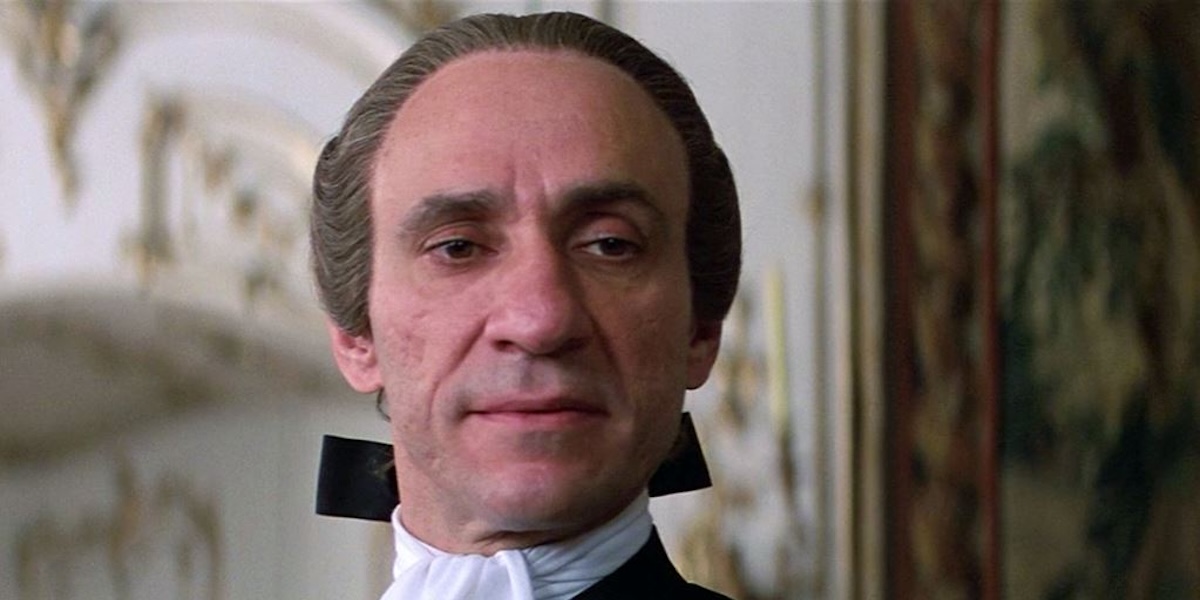
Who was Salieri?
Antonio Salieri was an Italian composer of some renown. Born in the Republic of Venice in 1750, he had a passion for music from an early age and was mentored by the composer Florian Leopold Grassmann, who took the orphaned Salieri to Vienna.
Salieri became a successful opera composer, often drawing on classical literature in his work. His Armida, based on an epic poem, was his breakthrough, and his commedia-esque La Fiera di Venezia, which was written for the Carnival, was a big popular hit. He also produced numerous orchestral works, although they were less celebrated.
He first crossed paths with Mozart in the early 1780s. Salieri then had further successes with the operas La grotta di Trofonio and Axur, re d’Ormus, and he was appointed Kapellmeister of the Imperial Chapel, where he conducted music. However, his power at court diminished considerably following the death of his patron, Emperor Joseph II, and his work fell out of favour as styles changed and the political tides in Europe shifted.
Salieri attempted suicide in 1823, and was committed to medical care. He died in 1825, at the age of 74. He was largely forgotten after his death, until the play Amadeus revived his reputation and introduced him to new audiences.
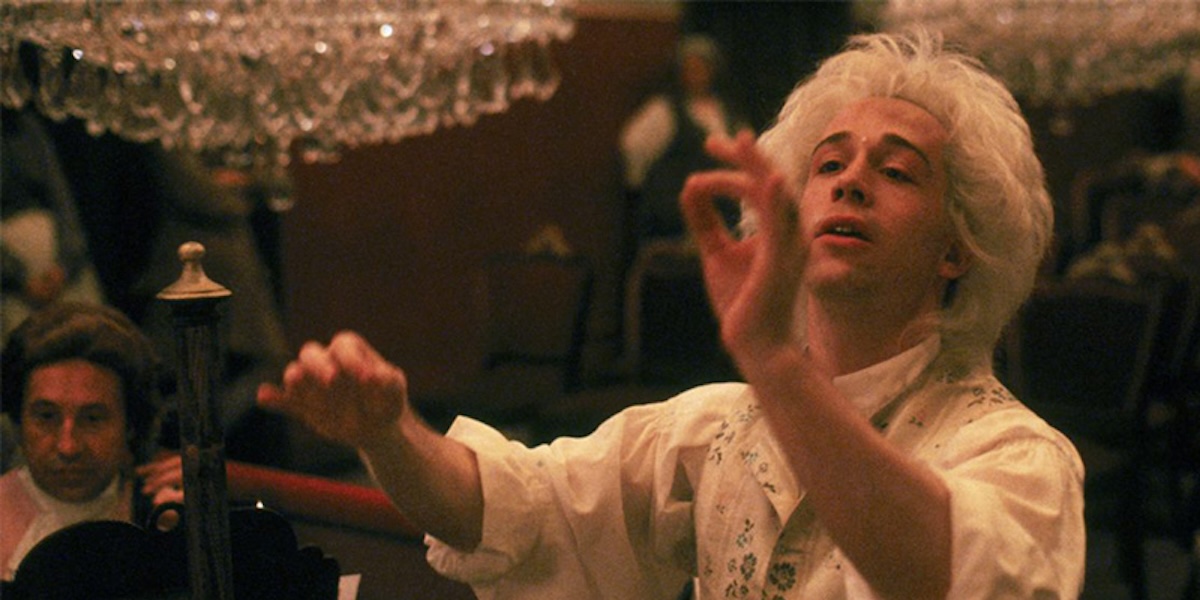
Who was Mozart?
Unlike the more elusive Salieri, we all know who Mozart was and have heard at least some of his inimitable work. Born in 1756 in Salzburg, the budding genius was a famous child prodigy who was already composing at the age of five. His musician father, Leopold, encouraged him, and took young Mozart, along with his talented sister, on a European tour to show off their remarkable talent.
Mozart was employed at the Salzburg Court and continued his astonishing output, composing everything from symphonies and concertos to masses, string quartets and operas. But he resented his low salary and travelled to Paris, where he fell into debt and had to sell his valuables. Mozart then pinned his hopes on impressing Emperor Joseph II in Vienna.
He did indeed prosper in Vienna, and he also married Constanze Weber (after some difficulties obtaining her father’s permission) and had six children, of whom two survived. Mozart had success with operas like The Marriage of Figaro and Don Giovanni, under the patronage of the Emperor.
However, by the 1780s he was struggling for money, partly because of the Austro-Turkish War, which made conditions difficult for artists in Vienna, and he may also have been suffering from depression. Still, he continued to produce extraordinary work right up until his illness and death in 1791, aged just 35. Of course, since then his has become one of the most revered and beloved of all composers, with his work still performed all around the world.
Was Mozart really that eccentric?
The Mozart of Shaffer’s Amadeus is immature, sex-obsessed, fond of vulgar language and juvenile jokes, and boorishly behaved. It is true that in real life Mozart had a puerile sense of humour, as we can see from his letters, which contain scatological language and rude gags.
Shaffer said he was also interested in how childlike Mozart sounded in those letters, and was struck by the extraordinary juxtaposition of this seeming immaturity and the sophisticated brilliance of Mozart’s artistic output. It’s certainly striking on stage.
However, it seems unlikely that Mozart was really such a bizarre character in public. He had performed at royal courts since he was young, and would surely have known how to behave himself – and how crucial it would be to obtain the favour of nobles and royals. That element of his personality has been exaggerated so that the play’s version of Salieri has more reason to be outraged and perplexed that God has given his divine gift to such a crude man.

Did the pair really have a feud?
In Shaffer’s play, Salieri is furiously jealous of Mozart and disgusted by his behaviour, while Mozart’s downfall is in part because Salieri deliberately betrays and sabotages him. Did that actually happen?
It’s unlikely that the duo were actually at odds to the extent that Shaffer depicts them – although it does make for juicy drama. There is some evidence that they actually had a decent relationship; for example, Salieri taught Mozart’s son Franz music.
However, there are some hints of a rivalry too. In Mozart’s letters with his father Leopold, they make reference to a cabal of Italians, led by Salieri, who actively try to stop Mozart getting jobs or commissions – although that may have been more of a general resentment of the Italian influence at court rather than a personal antipathy.
But Mozart was certainly aware of Salieri’s pull with the Emperor too, and does seem to have believed that Salieri got in his way on occasion, writing in another letter about a “trick” of Salieri’s. The pair did also compete publicly, such as in 1786 when the Emperor held an opera composition contest.
Yet on other occasions they seemed to champion one another. Salieri revived Mozart’s Figaro at Kapellmeister, and he and Mozart even collaborated on a cantata for voice and piano. Salieri also reportedly conducted Mozart’s 40th Symphony. So perhaps theirs was more of an amicable professional rivalry rather than a blood feud.
There was a persistent rumour that Mozart had died because Salieri poisoned him, perhaps started by one of the German musicians who disliked the Italian cabal. At least one composer, Carl Maria von Weber, refused to socialise with Salieri as a result. Ultimately, though, the feud of Amadeus seems like more of a brilliant story, and a great psychological basis for gripping drama, rather than a scrupulously accurate historical portrait.
Main photo credit: Michael Sheen and Callum Scott Howells (Photo by Danny Kaan for Margo Jones Agency). Inset: Amadeus the movie, Amadeus at the National Theatre (Photos courtesy of the film, photo by Marc Brenner)
Originally published on
Related articles


Subscribe to our newsletter to unlock exclusive London theatre updates!
- Get early access to tickets for the newest shows
- Access to exclusive deals and promotions
- Stay in the know about news in the West End
- Get updates on shows that are important to you
You can unsubscribe at any time. Privacy Policy