


Opinion: Why playing a real person on stage is such a unique and irresistible challenge
From Alexander Hamilton to Frank Sinatra, audiences can't get enough of real people in theatre shows – and nor can performers.
Summary
- Real people are the inspiration for numerous West End shows
- Joel Harper-Jackson stars as Frank Sinatra in new biographical musical Sinatra
- He joins a host of performers playing everyone from Alexander Hamilton to Mary Todd Lincoln
- This unique challenge is relished by both performers and audiences
This summer, Joel Harper-Jackson becomes Ol’ Blue Eyes, embodying the almighty legend Frank Sinatra in the West End musical bearing his name. As the show’s tagline has it “You know the music. Now meet the man.”
That really sums up both the difficulty and irresistible allure of such roles, which invite actors to encapsulate the genius of such figures whose work or deeds echo through history, while also getting under the skin of the actual person. The best versions of such performances go far beyond mere imitation or tribute, and allow us to get to know them in a new, yet still inherently truthful, way.
No wonder real people are still front and centre on our stages, whether in recent productions like Kyoto, Jersey Boys and Evita, or current and upcoming shows including Hamilton, Grace Pervades, Marie & Rosetta, Pride, and of course Sinatra.
It’s a unique opportunity
All acting, to a certain degree, involves transforming into another person, getting to grips with their physicality and their psychology. They might share some characteristics and traits with the performer, or it might be a radical leap (few actors, we hope, have actually plotted regicide before leading a production of Macbeth).
Playing a real person, however, is a distinct and fascinating challenge – especially if they’re a well-known figure. The stars of MJ The Musical had a wealth of pictures, articles, recorded performances, music videos and more to draw upon, and very specific attributes to master for that show, such as Michael Jackson’s unmistakable vocal stylings and dance moves.
Rather than building a backstory for a fictional character, there may well be an actual biography available, such as that of Tina Turner – which is both recounted in the musical Tina, and in the rock ‘n’ roll icon’s own memoir. Performers could even have the honour of meeting the person they’re playing, as the original stars of Tina did.
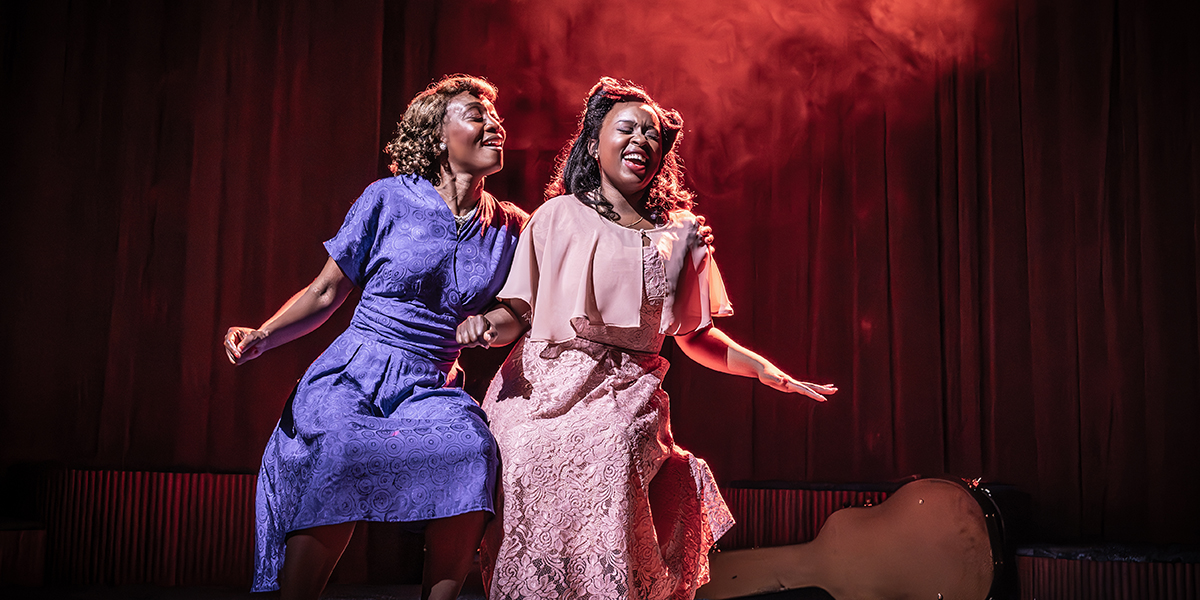
That’s not to say writers and performers can’t still take imaginative leaps too, especially if we’re illustrating private, undocumented moments within the story. That’s the case with current West End show Marie & Rosetta, in which Beverley Knight and Ntombizodwa Ndlovu play, respectively, gospel legends Sister Rosetta Tharpe and Marie Knight. While their music is well known, the nature of the relationship between these trailblazing women is something that the show can expand on in the name of gripping drama.

It’s a big responsibility
Playing a real person is undoubtedly a major responsibility. That goes double if the subject matter of the show is affecting and thought-provoking, such as in James Graham’s powerful recent play Punch, which concerns male violence and restorative justice, or the extraordinary musical Come From Away, about the Newfoundland community that took in stranded plane passengers on 9/11.
That doesn’t mean that the performance has to be overly reverential, and most dramas take at least some creative licence. But it adds a resonant extra dimension that both actors and audiences feel keenly. That will certainly be the case for the much-anticipated stage musical version of movie Pride, about the real-life group of queer activists who supported striking miners in the 1980s, and which comes to the National Theatre this summer, as it is for musical The Boy Who Harnessed the Wind, telling the true story of brilliant inventor William Kamkwamba.
Even if the performance isn’t an exact copy of the real person, actors will likely want to honour some fundamental truth in that individual – whether a quality like courage or kindness, or, in the case of an artist, the talent, drive or genius that made them an indelible star.

There are many different approaches
Part of the excitement of seeing a real person or story brought to the stage is finding out how that creative team chose to bring them to life. There are so many different ways of doing so, ranging from the naturalistic approach, which gives us the thrill of feeling like we’re peeking behind the scenes, through to something more formally radical.
In the former camp, we’ve had acclaimed work like Peter Morgan’s play The Audience, which imagines what might have taken place when Elizabeth II met her prime ministers in private. Or, in David Hare’s play Grace Pervades, which is coming to the West End, Ralph Fiennes and Miranda Raison play Victorian-era theatre titans Sir Henry Irving and Ellen Terry – depicting them both on- and offstage.
The recent smash-hit revival of Andrew Lloyd Webber and Tim Rice’s Evita, starring Rachel Zegler, resurrected an icon of her age (albeit a divisive one) via a modern icon. Zegler performing “Don’t Cry for Me Argentina” from the London Palladium balcony harnessed her celebrity power and illustrated the effect of it on a contemporary, smartphone-wielding audience to allow us to better understand Eva Perón.
The ground-breaking Hamilton uses cleverly deployed non-traditional casting to help us view America’s revolutionary Founding Fathers in a completely new way, and, likewise, to connect to history. Fellow trailblazing musical SIX does the same by refracting Henry VIII’s queens through modern pop divas. Both shows also provide welcome opportunities to performers who might previously have been excluded from playing these historical figures.

Actors can have fun too
At the opposite end of the spectrum from something like Punch is the gleefully outlandish comic approach taken by shows such as Oh, Mary! and Titanique. Cole Escola’s Oh, Mary! depicts First Lady Mary Todd Lincoln as a hard-drinking, merrily destructive narcissist who desperately wants to be a cabaret star – although even there, the show has sneakily profound messages about identity and acceptance.
But current West End star Mason Alexander Park is clearly having a ball playing Mary, as are the fabulous actresses who have transformed into another mischievous diva: Canadian power ballad queen Céline Dion, star of musical romp Titanique. We might venture to say there’s even a hint of a very well-known person (perhaps a terrifying Vogue editor who’s fond of wearing dark glasses) in the deliciously villainous Miranda Priestley, ruler of The Devil Wears Prada. That’s all!
Of course, the particular pleasure of playing a legendary musician, as Harper-Jackson is in Sinatra, is getting to honour their electrifying art during a live show. While we look forward to getting to know the man via this biographical story, which digs into his romantic relationships and off-stage battles, Harper-Jackson and audiences will also get to share in the joy of his songs – music that both expresses who Sinatra is, and has become part of the fabric of our own lives.
Main photo credit: Joel Harper-Jackson in Sinatra The Musical (Photo by Alexis Chabala, Seamus Ryan). Inset: Beverley Knight and Ntombizodwa Ndlovu in Marie & Rosetta, David Shields in Punch, Ralph Fiennes and Miranda Raison in Grace Pervades, Mason Alexander Park in Oh, Mary! (Photos by Marc Brenner, Manuel Harlan)
Originally published on
Related articles


Subscribe to our newsletter to unlock exclusive London theatre updates!
- Get early access to tickets for the newest shows
- Access to exclusive deals and promotions
- Stay in the know about news in the West End
- Get updates on shows that are important to you
You can unsubscribe at any time. Privacy Policy